
How Long Does Whipped Cream Actually Last?
FastGas Blogs

How Long Does Whipped Cream Last?
For food professionals, knowing how long whipped cream lasts is a practical operational concern, not an afterthought. Waste, consistency, and food safety all depend on storing it correctly, and the answer differs significantly depending on how the cream was prepared.
This article is a straightforward reference for pastry professionals, bakery owners, and HORECA buyers working with nitrous oxide in Africa and other whipped cream preparation methods.

Understanding whipped cream’s shelf life
Whipped cream is a perishable dairy product, and its shelf life depends on how it was made and how it is stored. Fresh, unstabilised whipped cream will hold for two to four hours at room temperature before it begins to weep and lose its structure.
Refrigerated and properly covered, unstabilised cream may last up to 24 hours, though quality deteriorates quickly after that. Commercially prepared aerosol whipped cream lasts longer when unopened, but once opened, it should be used within five to seven days and kept refrigerated. Always confirm the manufacturer’s guidance, as formulations vary.
Stabilised whipped cream, using agents such as gelatin or cornstarch, can extend refrigerator life to two to four days. This makes it a preferred option for operations that prepare cream in advance for service.
How long does whipped cream last in a dispenser?
A professional N2O whipped cream dispenser changes the shelf life equation considerably. Cream charged with food-grade nitrous oxide and stored in a sealed dispenser can last in the refrigerator for up to one to two weeks, depending on the fat content of the cream, its original freshness, and consistent cold storage, without significant loss of texture or flavour.
The sealed environment inside the dispenser prevents exposure to air, which is the primary driver of oxidation and spoilage in dairy products. Keeping the dispenser cold, upright, and properly sealed between uses ensures the cream inside remains protected.
The dispenser itself must also be cleaned thoroughly between refills. A dispenser that is not properly sanitised can introduce bacteria into fresh cream, shortening its safe use window regardless of the charger used.
Factors that affect the shelf life of whipped cream
Several variables directly influence how long whipped cream remains safe and stable. Understanding these helps operators make better decisions at every stage of preparation and storage.
Ingredient quality
The fat content of the cream used at the outset matters considerably. Cream with a fat content of 35 per cent or above whips more reliably and holds its structure longer than lower-fat alternatives.
Using cream that is close to its use-by date will always produce a less stable result, even with stabilisers added.
Proper storage
How long does fresh whipped cream last is largely a question of storage discipline. Cream left uncovered in the refrigerator absorbs odours and loses moisture rapidly, accelerating textural breakdown.
Always store whipped cream in an airtight container or sealed dispenser, kept at a consistent temperature below 4°C. In warmer climates across much of Nigeria and Ghana, ambient kitchen temperatures can be significantly higher, making prompt refrigeration especially critical.
Dispenser cleanliness
Residue left in a dispenser after use creates conditions where bacteria multiply quickly. A dispenser that looks clean on the outside may still carry contamination in the nozzle, gasket, or head assembly.
Regular deep cleaning after every use cycle is a non-negotiable standard in any professional kitchen.
Type of charger used
Food-grade N2O chargers create a controlled, inert atmosphere inside the dispenser that slows oxidation and inhibits bacterial growth. Using non-food-grade gas or chargers of uncertain origin can introduce impurities that affect both the safety and stability of the cream.
The quality of the charger is, therefore, a direct factor in how long the cream remains safe and usable.
Tips to extend the life of whipped cream
Small adjustments to technique and equipment can meaningfully extend how long whipped cream holds without compromising quality or safety.
Use cold ingredients and equipment
Cold cream whips faster and holds its shape longer. Chilling your bowl, whisk, and dispenser before use gives the fat globules the temperature environment they need to form a stable foam.
In warm commercial kitchens, particularly during summer in South Africa or in high-humidity coastal environments, this step is not optional.
Add stabilisers
Stabilisers slow the breakdown of whipped cream’s foam structure, making them valuable for operations that prepare cream in advance. The right choice depends on the application, desired texture, and required service window.
Use high-quality dispensers and chargers
A well-made dispenser maintains pressure consistently and allows for even gas distribution throughout the cream. Inferior dispensers can leak, deliver uneven charges, or fail to seal properly, all of which reduce shelf life and consistency.
Stabilise with cream of tartar
Cream of tartar is a mild acid that helps stabilise the protein structure in whipped cream. Use approximately one-eighth of a teaspoon per cup of cream.
It is the lightest of the stabiliser options, suitable when a subtle tang is acceptable and the cream needs to hold for a few extra hours, but not recommended for extended hold windows where gelatin or cornstarch will perform better.
Stabilise with cornstarch
Cornstarch is one of the most accessible and neutral-tasting stabilisers available. Adding one to two teaspoons per cup of cream before whipping helps absorb excess liquid and extends hold time by several hours under refrigeration.
Stabilise with instant pudding mix
A small quantity of instant pudding mix, typically one to two tablespoons per cup of cream, adds both structure and a subtle sweetness. It suits layered desserts and filled products where a firmer cream is required.
Stabilise with unflavored gelatin
Gelatin is the most effective stabiliser for long-hold applications. When bloomed and folded into cream at the right temperature, it allows whipped cream to hold in the refrigerator for up to four days.
It requires slightly more technique than other methods but delivers the most reliable results for operations with extended service windows.
How to tell if whipped cream has gone bad
Spoiled whipped cream typically presents with visible separation, where liquid pools at the base and the foam structure collapses. A sour or off smell is another reliable indicator, as fresh cream carries a clean, neutral dairy scent.
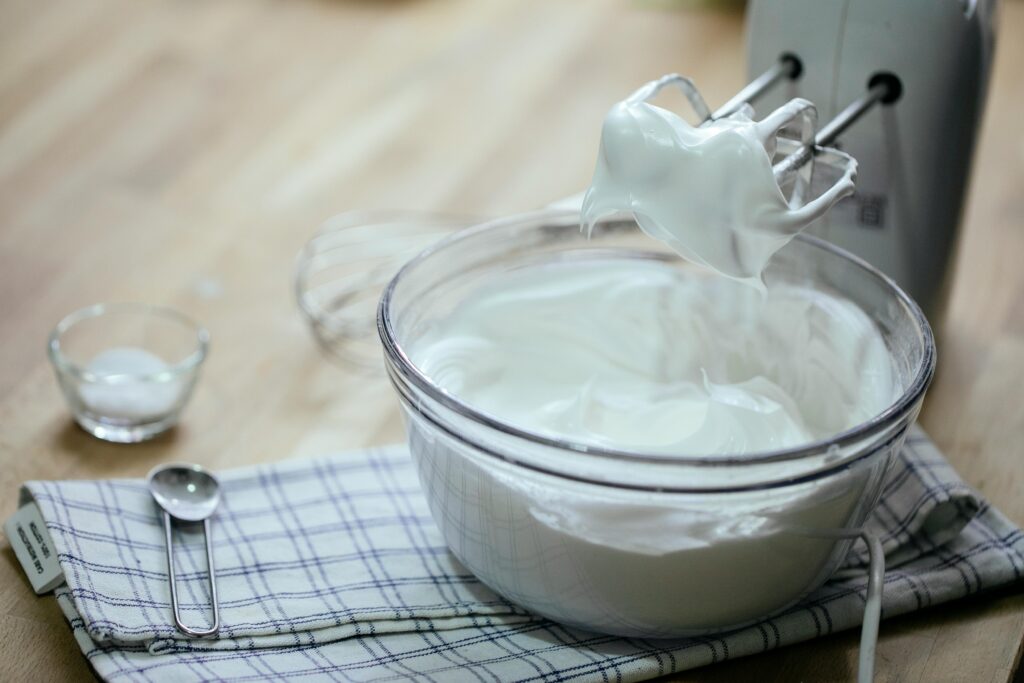
A yellowed colour or slimy surface texture is also a clear sign of spoilage. When in doubt in a commercial setting, always discard the product.
The cost of food waste is always lower than the risk of serving spoiled dairy to customers. Establishing a clear labelling and dating system for all stored cream is standard practice in any responsible kitchen.
Whipping cream vs heavy cream
Whipping cream and heavy cream are closely related but not identical. Whipping cream typically has a fat content of around 30 to 35 per cent, while heavy cream sits at 36 per cent or higher.
The difference matters in professional contexts because higher-fat cream produces a more stable whip with better volume and longer hold time. Heavy cream is generally preferred in HORECA settings where consistency over time is essential.
In the South African market, both are widely available through foodservice distributors, though labelling conventions can vary between suppliers.
How FastGas N2O keeps whipped cream fresh longer
Nitrous oxide is an inert gas that, when dissolved in cream under pressure inside a sealed dispenser, displaces oxygen. Oxygen is the primary driver of oxidation and microbial activity that causes dairy to spoil.
The gas also produces finer, more uniform bubbles than mechanical whipping alone, resulting in cream that holds its texture for longer during extended service, buffet functions, or high-volume production shifts. Food-grade gas from a verified source ensures no impurities are introduced into the cream.
For operations where dispenser-based whipped cream is a regular output, sourcing the best cream charger from a reliable supplier is a practical necessity. FastGas Africa supplies food-grade N2O chargers across the continent, providing a consistent and verifiable source for kitchens that depend on quality and traceability.
Conclusion
How long whipped cream lasts depends on three variables: how it was made, whether stabilisers were used, and how it is stored. Fresh, unstabilised whipped cream is appropriate for immediate service, prepared to order and used within the same service window.
For advanced preparation or products requiring a few days of hold time, stabilisers such as gelatin or cornstarch are the practical choice, extending refrigerator life to two to four days. For high-volume professional operations, including pastry labs, hotel banquet kitchens, and catering companies, an N2O dispenser setup offers the most operationally efficient approach.
Understanding which method fits your operation is the first step toward reducing waste, improving consistency, and maintaining the food safety standards your clients expect.
Frequently Asked Questions
How long does whipped cream stay whipped?
This depends on whether it has been stabilised. Unstabilised whipped cream begins to lose its structure within two to four hours at room temperature.
With stabilisers added, it can hold for up to two to four days when properly refrigerated.
How long is whipped cream good for after opening?
An opened pressurised aerosol can should be used within five to seven days and kept refrigerated throughout. For homemade cream stored in a sealed container, the shelf life is typically 24 hours without stabilisers.
How long does fresh whipped cream last?
Without stabilisers, fresh whipped cream lasts no more than 24 hours in the refrigerator and considerably less at room temperature. In warm climates, the shelf life can shrink to just a few hours if the cream is left uncovered or unrefrigerated.
How long does homemade whipped cream last?
Without stabilisers, expect a maximum of 24 hours when kept consistently cold. With gelatin or cornstarch added, properly refrigerated homemade cream can hold for up to three to four days.
Does whipped cream need to be refrigerated?
Yes, whipped cream is a perishable dairy product and must be kept at or below 4°C at all times outside of service. Any cream left at room temperature for more than two hours should be discarded, particularly given the warmer ambient conditions common across much of sub-Saharan Africa.


