
CO2 Cylinders: A Complete Guide for African Businesses
FastGas Blogs

CO2 Cylinders: A Complete Guide for African Businesses
CO2 cylinders are essential infrastructure across a broad range of African industries, from food and beverage production to manufacturing, healthcare, and agriculture. As businesses across the continent formalise their operations and scale their output, understanding how to select, store, and manage these cylinders correctly is an increasingly important operational requirement.
What Is a CO2 Cylinder?
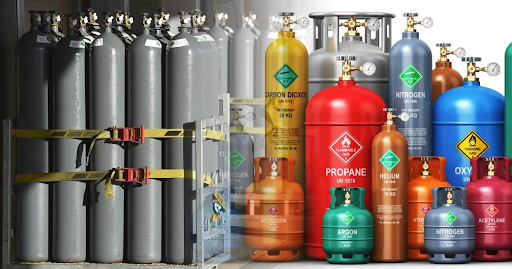
A CO2 cylinder is a pressurised vessel designed to store and dispense carbon dioxide for commercial or industrial use.
These cylinders come in a range of sizes and configurations, from compact portable units to large stationary containers. They serve sectors as varied as food production, metal fabrication, healthcare, and controlled agriculture.
CO2 gas cylinders are typically manufactured from steel or aluminium and are built to withstand significant internal pressure. They are produced to strict safety standards and must undergo regular inspection to remain in service.
How CO2 Cylinders Work: Pressure, Liquid State, and Storage
Inside a CO2 cylinder, carbon dioxide is stored in a liquid state under high pressure. When the valve is opened, the pressure difference causes the CO2 to transition from liquid to gas as it exits the vessel.
This phase change is what makes CO2 cylinders so efficient. A relatively compact vessel can store a large usable volume of gas.
The pressure inside a standard cylinder at room temperature typically sits between 57 and 60 bar, rising with temperature. Temperature has a significant effect on internal pressure, which is why the storage of CO2 cylinders in cool, well-ventilated spaces is critical for both safety and performance.
CO2 Cylinders vs CO2 Tanks: What’s the Difference?
The terms are often used interchangeably, but there is a practical distinction worth understanding.
CO2 cylinders generally refer to portable, refillable vessels that can be moved and exchanged, such as those connected to a draught beer system or a welding rig. CO2 tanks typically describe larger, stationary storage units installed at industrial sites.
For most African businesses operating at small to medium scale, cylinders are the more practical and cost-effective option. Bulk tanks become relevant when consumption volumes justify the infrastructure investment.
CO2 Cylinder Sizes and What They’re Used For
Understanding the different types of CO2 cylinders available is one of the most practical decisions a business operator will make. The options range from small portable units to large industrial vessels, and each suits a different operational profile.
Small Cylinders (Under 10 kg)
These compact units are popular in hospitality settings such as carbonated water dispensers, coffee machines, and small draught beer systems.
Disposable CO2 cylinders fall into this category, designed for single use in low-volume applications. These small, threaded cartridges (16g to 33g) are used in portable beverage equipment, cocktail siphons, or bike tyre inflation. They are distinct from home sparkling water makers, which use refillable exchange cylinders instead of true single-use cartridges.
While convenient, disposable CO2 cylinders generate more waste and typically cost more per unit of gas over time. Businesses with regular consumption are usually better served by refillable alternatives.
Standard Commercial Cylinders (10–20 kg)
This is the most widely used size range for commercial businesses.
Restaurants, bars, bakeries, and light manufacturing operations across Nigeria and South Africa typically rely on cylinders in this range. They balance portability with sufficient gas volume for consistent daily operations.
Large Industrial Cylinders (50 kg+)
These cylinders are designed for high-volume, continuous use in heavy manufacturing, large-scale food and beverage production, and industrial welding.
They are less portable and are typically stored in a fixed, secured location on-site.
Bulk CO2 Tanks
For businesses with very high consumption, such as large breweries, bottling plants, or industrial processors, bulk CO2 tanks offer the lowest cost per unit of gas.
In more formalised markets, these systems are often leased from suppliers. In many African markets, outright purchase is also common. Either way, bulk storage requires a dedicated area with appropriate safety infrastructure.
Most Common Uses of CO2 Cylinders in African Industries
CO2 has a broader range of applications than many operators initially expect. We have outlined the primary use cases most relevant to the African business context below.
Food and Beverage
This is one of the largest end-use sectors on the continent. Food-grade CO2 cylinders are used to carbonate beverages, preserve packaged foods through modified atmosphere packaging, and maintain the quality of draught beer systems.
Food-grade CO2 cylinders are held to higher purity standards than industrial-grade equivalents. Using the correct grade is a food safety requirement, not a preference.
In Nigeria and South Africa, where food and beverage manufacturing is well established, demand for certified food-grade CO2 is growing steadily.
Welding and Metal Fabrication
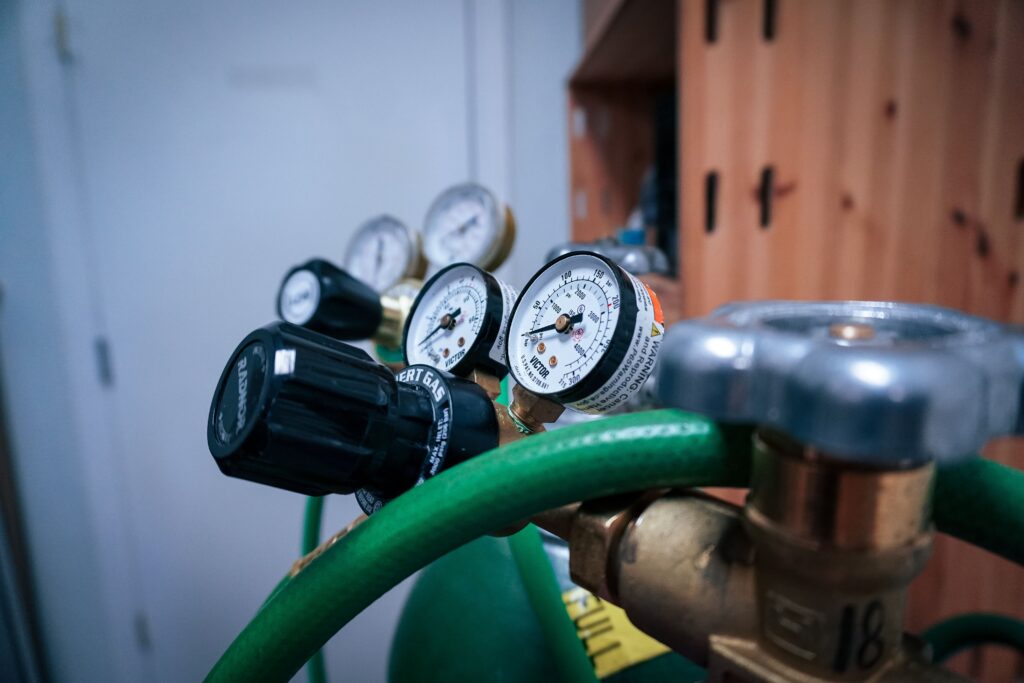
CO2 is widely used as a shielding gas in MIG welding, either on its own or blended with argon.
Fabrication workshops across Lagos, Johannesburg, and Accra rely on CO2 gas cylinders to protect weld pools from atmospheric contamination, which would otherwise weaken the joint.
It is a cost-effective alternative to pure argon, making it particularly relevant for small and medium fabrication businesses.
Agriculture and Greenhouse Farming
CO2 enrichment is an increasingly relevant technology for greenhouse operations. Plants absorb CO2 during photosynthesis, and maintaining elevated CO2 levels within a greenhouse can meaningfully accelerate growth and improve yields.
As greenhouse farming expands across Kenya and South Africa — both established horticultural exporters — this application is growing alongside it.
Water Treatment
CO2 is used in water treatment to adjust pH levels, particularly in the remineralisation of reverse osmosis water.
This application is relevant to both municipal water systems and private bottled water producers, a growing industry across West and Southern Africa.
Healthcare and Medical Applications
In clinical settings, CO2 is used in laparoscopic surgery to insufflate the abdominal cavity, as well as in certain respiratory therapies and diagnostic procedures.
Medical-grade CO2 cylinders are subject to strict purity and handling requirements and must be sourced from certified suppliers. They are not interchangeable with food-grade or industrial-grade CO2.
CO2 and Other Industrial Gas Cylinders: Understanding Your Options
CO2 is not the only gas available in pressurised cylinders, and the choice of gas matters considerably depending on the application. Here is how CO2 compares to the other gases operators commonly encounter.
CO2 vs Nitrogen
Nitrogen is an inert gas used for purging, blanketing, and pressurising systems. Unlike CO2, it does not carbonate beverages and does not support combustion.
For applications where any gas interaction with a product would be problematic, nitrogen is preferred. For carbonation and welding, CO2 remains the standard choice.
CO2 vs Argon
Argon is the preferred shielding gas for TIG welding and stainless steel work, producing a cleaner and more controlled arc than CO2 alone.
Many fabrication shops use a CO2 and argon blend to balance cost with weld quality. Pure argon is significantly more expensive and less accessible for smaller workshops across the continent.
CO2 vs Nitrous Oxide (N2O)
N2O serves a different set of applications entirely. It is used in culinary settings for whipped cream dispensers and certain food preparation techniques, as well as in medical anaesthesia.
While both CO2 and N2O are stored in pressurised cylinders, they are not interchangeable. Each requires its own handling protocols and safety considerations.
How to Choose the Right CO2 Cylinder for Your Business
Selecting the right CO2 cylinder involves more than matching size to application. Volume, storage conditions, supply logistics, and regulatory compliance all factor into the decision.
Volume and Frequency of Use
Start by estimating your monthly gas consumption. A small restaurant using CO2 for a draught beer system will have very different requirements from a bottling plant or a welding workshop running multiple shifts.
Underestimating your needs leads to operational disruptions. Overestimating ties up capital unnecessarily.
Storage and Safety Requirements
The storage of CO2 cylinders requires careful attention to location and conditions. Cylinders should be:
- Stored upright and secured against falling
- Kept in a cool, shaded, and well-ventilated area
- Positioned away from heat sources and direct sunlight
- Separated from flammable materials
CO2 can accumulate at ground level in confined spaces and poses an asphyxiation risk. Adequate ventilation in any indoor storage area is non-negotiable.
Buying vs Cylinder Exchange Programmes
Many suppliers across Nigeria, South Africa, and Ghana offer cylinder exchange programmes, where a business returns an empty cylinder and receives a full one in return.
This model simplifies CO2 cylinder refill management and removes the need for on-site CO2 cylinder filling infrastructure.
For businesses without the facilities for refilling CO2 cylinders directly, exchange programmes are usually the most practical approach. Outright purchase suits businesses with sufficient volume and reliable supplier relationships.
Regulatory Considerations in Africa
Transporting CO2 cylinders requires compliance with applicable hazardous goods regulations. In South Africa, the Transport of Dangerous Goods Act sets out requirements covering labelling, vehicle specification, and driver training.
While DOT regulations for transporting CO2 cylinders are a United States framework, many African regulatory bodies have developed their own CO2 cylinders regulations to comparable standards. Correct labelling, secure loading, and emergency documentation are good practices regardless of jurisdiction.
All CO2 gas cylinders must be subject to periodic inspection, including the hydrostatic test for CO2 cylinders, which pressurises the vessel with water to check for leaks or deformation. Most regulatory frameworks require this every five years, though intervals vary by country and cylinder type.
Conclusion
CO2 cylinders are not a niche piece of equipment. They are business-critical infrastructure that underpins operations across food production, manufacturing, healthcare, and agriculture throughout Africa.
As industries in Nigeria, South Africa, Ghana, Kenya, and beyond continue to formalise and scale, knowing how to select, store, transport, and maintain CO2 cylinders is an increasingly important operational competency.
Businesses that treat their gas supply chain with the same rigour they apply to other inputs will be better placed to manage costs, maintain consistency, and operate safely as Africa’s industrial base grows. FastGas supplies food-grade and industrial CO2 cylinders across Africa, providing businesses with reliable access to the gases that keep their operations running.
Frequently Asked Questions About CO2 Cylinders
What are CO2 cylinders used for?
CO2 cylinders are used across food and beverage carbonation, welding and metal fabrication, greenhouse agriculture, water treatment, and medical procedures.
How to store CO2 cylinders?
Store cylinders upright in a cool, shaded, and well-ventilated area. Secure them with chains or brackets to prevent tipping, and keep them away from heat sources and flammable materials.
How long do CO2 cylinders last?
It depends entirely on the consumption rate. A 10 kg cylinder used in a moderate-traffic bar may last between one and two weeks. Industrial users will cycle through cylinders considerably faster.
How is CO2 stored in cylinders?
CO2 is stored as a liquid under pressure inside the cylinder. When the valve is opened, the drop in pressure causes the liquid to vaporise and release as gas.
How to dispose of empty CO2 cylinders?
Disposable CO2 cylinders should be fully depressurised before disposal and recycled through appropriate metal recycling channels. Refillable cylinders should be returned to the supplier or a participating exchange point.
Do CO2 cylinders expire?
Cylinders do not expire in the conventional sense, but they must pass regular inspection, including the hydrostatic test for CO2 cylinders, to remain in legal and safe use. A cylinder that fails inspection or has not been tested within the required interval should be taken out of service immediately.


