
Types of Gas Cylinders: A Safe Selection & Usage Guide
FastGas Blogs

Types of Gas Cylinders: A Safe Selection & Usage Guide
This guide covers the full range of cylinder types for context, though FastGas’s African operations focus specifically on food-grade CO₂ and nitrous oxide cylinders for catering and hospitality use. Gas cylinders are essential equipment in African businesses, from the bakeries of Lagos to the restaurant kitchens of Cape Town. When the wrong types of gas cylinders are selected, stored incorrectly, or misidentified, the consequences range from operational disruption to serious safety incidents. Understanding your cylinders is a fundamental responsibility.
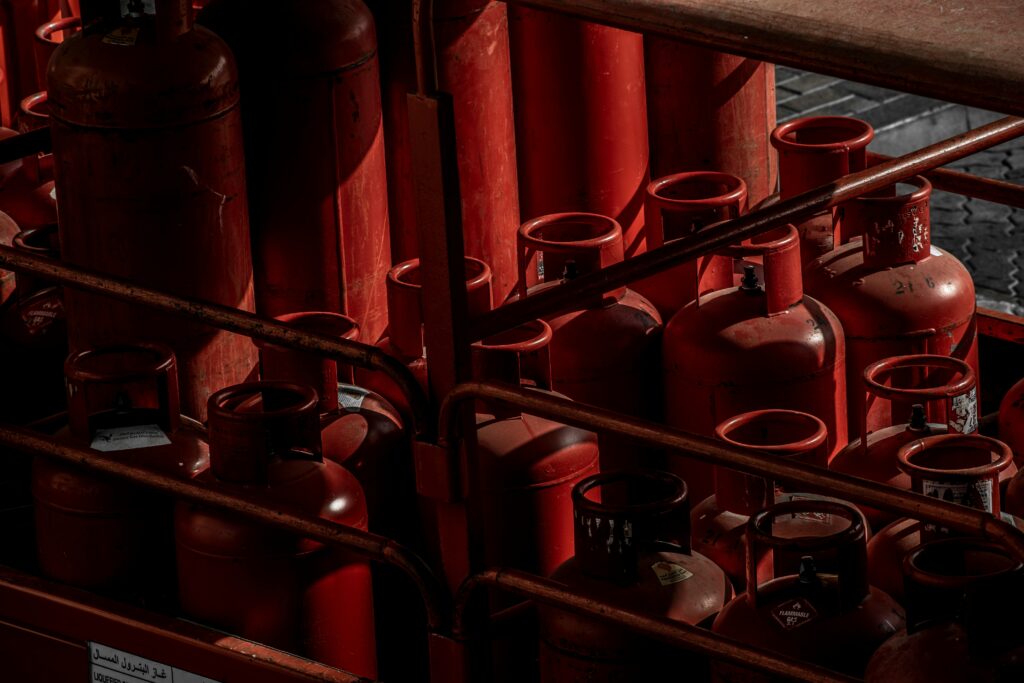
Gas Cylinder Types by Construction
A cylinder’s construction determines its weight, pressure tolerance, durability, and suitability for different environments.
There are 4 types of gas cylinders defined by international standards, and businesses using nitrous oxide, CO₂, or other gases should consider the construction type as part of safe supply and storage planning.
Type 1 – All Metal (Steel or Aluminium)
Type 1 cylinders are made entirely from steel or aluminium and are the most widely used across Africa.
They are the standard choice for LPG supply in Nigerian and South African commercial kitchens; steel variants are robust and cost-effective, while aluminium options are lighter but come at a higher cost.
Safety note: Inspect regularly for corrosion, particularly in coastal or high-humidity environments.
Type 2 – Hoop-Wrapped Aluminium
Type 2 cylinders have an aluminium liner with a fibreglass or composite wrap around the cylindrical section only.
They are lighter than full-metal equivalents while maintaining pressure integrity, though they are less common in everyday African commercial food service.
Safety note: Check the wrap for cuts, abrasions, or delamination before each use.
Type 3 – Fully-Wrapped Carbon Composite
Type 3 cylinders use a metal liner (typically aluminium) fully wrapped in carbon or glass fibre composite. This delivers significant weight reduction without compromising pressure performance, making them well-suited to portable catering and mobile food service.
Safety note: Composite wraps can sustain invisible impact damage. Any cylinder that has been dropped or struck should be professionally inspected before further use.
Type 4 – Full Composite
Type 4 cylinders use a plastic liner fully wrapped in composite material, making them the lightest of all four types. They are used in specialist applications, including medical oxygen and some food-grade gas supplies.
Safety note: Type 4 cylinders are not compatible with all gas types. Always confirm suitability with your supplier before use.
| Feature | Type 1 | Type 2 | Type 3 | Type 4 |
| Cost | Low | Moderate | High | Highest |
| Weight | Heavy | Medium | Light | Lightest |
| Portability | Low | Medium | High | Highest |
| Best Use | Fixed kitchen LPG, industrial | Industrial/medical | Mobile catering, portable food service | Medical oxygen, specialist food-grade |
Gas Cylinder Types by Content
Each gas type carries distinct handling requirements that operators must understand, regardless of construction type.
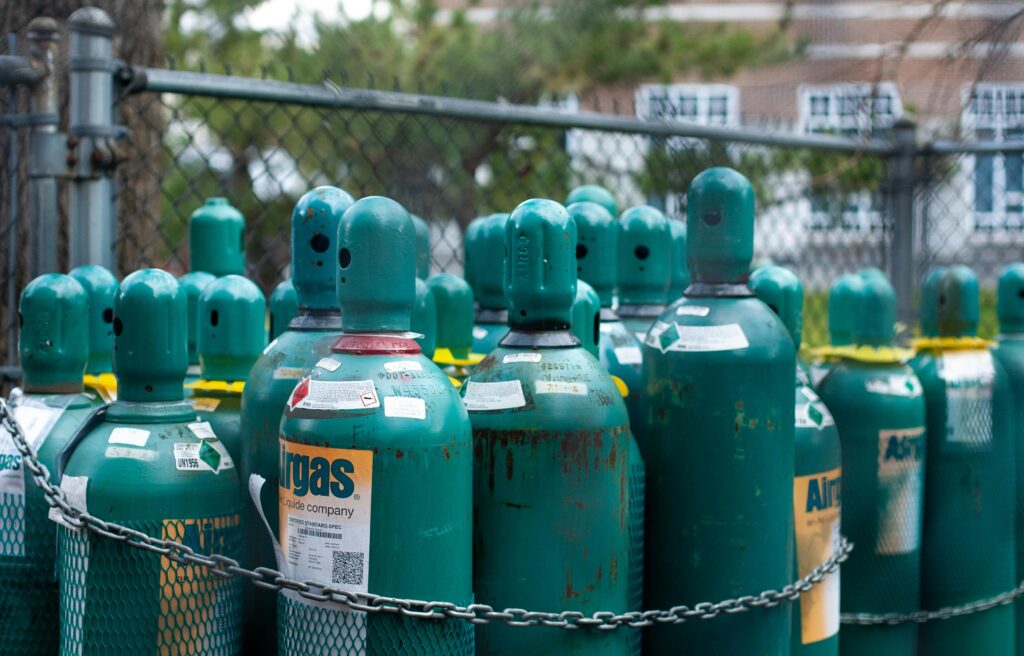
LPG Cylinders (Cooking & Heating)
LPG (liquefied petroleum gas) is the most prevalent type of gas cylinder in Africa, found in virtually every commercial kitchen without piped gas infrastructure and widely used for home cooking throughout the continent.
Safe handling: Never store LPG cylinders near ignition sources or in poorly ventilated spaces. Check valve connections for leaks using soapy water; never an open flame.
Oxygen Cylinders (Medical & Industrial)
Oxygen cylinders serve medical patient care and industrial cutting and welding. Among the types of medical gas cylinders, oxygen is the most critical and, as a key type of gas cylinder in a hospital setting, is subject to the strictest storage controls.
Safe handling: Oxygen accelerates combustion aggressively. Keep cylinders away from oils, greases, and flammable materials at all times.
Nitrous Oxide (N2O) Cylinders
In food-grade applications, N2O is used to charge cream whippers, produce culinary foams, and support modern plating in high-volume kitchens and events catering. Nitrous oxide cylinders must always be sourced from reputable suppliers with verifiable purity certification.
Safe handling: Store upright in a well-ventilated area away from heat sources. All staff operating whipping equipment must be properly briefed before handling.
CO₂ & Nitrogen Cylinders (Beverage & Food Preservation)
CO₂ cylinders are standard equipment in operations serving draught beverages. Nitrogen is used in cold brew coffee systems, modified atmosphere packaging, and beer dispensing, where a smoother texture is required.
Safe handling: CO₂ poses an asphyxiation risk in confined spaces. Storage areas must be ventilated and staff trained to recognise exposure symptoms.
Acetylene Cylinders (Welding & Cutting)
Acetylene is a welding gas with no food service application; if present on shared premises, it must be stored entirely separately from food-grade gases.
Gas Cylinder Sizes and Capacities
Selecting the right cylinder size should reflect actual consumption patterns, not projected maximums.
- Small (3 kg to 6 kg LPG): Suited to small cafés, pop-up catering, and low-volume cooking.
- Medium (9 kg to 14.2 kg): Standard for most restaurant and bakery environments across Nigeria and South Africa.
- Large (19 kg and above): Appropriate for high-volume catering companies, central kitchens, and food production facilities.
Undersized cylinders cause disruption through frequent changeovers; oversized cylinders in confined spaces create unnecessary risk. Match capacity to actual consumption.
How to Identify Gas Cylinders by Colour
Colour coding is a practical safety identification tool. International standards, primarily ISO 32 and EN 1089-3, assign specific colours to cylinder shoulders based on gas content.
Note: African markets do not always reflect international colour standards. Use the table below as a general reference only, and always confirm gas content via the cylinder label, valve markings, and supplier documentation.
| Gas | Shoulder Colour (ISO/EN Standard) |
| Oxygen | White |
| LPG | Various (confirm with local supplier) |
| CO₂ | Grey |
| Nitrogen | Black |
| Nitrous Oxide | Blue |
| Acetylene | Maroon |
Safety, Handling and Storage
Correct storage and handling practices apply across all types of gas cylinders, regardless of gas content or construction type.
Storage Conditions
Across much of Africa, heat and humidity present real risks to stored cylinders. Never store cylinders in direct sunlight or in enclosed spaces where temperatures routinely exceed 50°C.
In coastal cities such as Lagos, Mombasa, and Durban, humidity accelerates corrosion on metal cylinders. Store cylinders upright, secured to a fixed structure, in shaded and ventilated areas.
Handling and Transportation Best Practices
Always use an appropriate trolley when moving cylinders. Valve caps and guards must be fitted during transport, and cylinders must never be moved in enclosed passenger vehicles.
Inspection, Maintenance and Expiry
All cylinders carry a test date stamped onto the body or collar, with most regulatory frameworks requiring hydrostatic testing every five to ten years.
Any cylinder that has exceeded its test date, shows visible corrosion, has a damaged valve, or has been involved in a fire or impact incident must be taken out of service and returned to the supplier immediately.
Compliance and Standards in Africa
Operators across the continent should be familiar with the regulatory bodies relevant to their market.
- South Africa: The South African Bureau of Standards (SABS) and associated SANS standards govern cylinder design, testing, and use.
- Nigeria: The Standards Organisation of Nigeria (SON) provides the applicable regulatory framework.
- Kenya: The Kenya Bureau of Standards (KEBS) sets requirements for types of gas cylinders in Kenya, covering certification and inspection standards.
While these bodies operate independently, they share broadly aligned safety objectives. Source cylinders only from suppliers who can demonstrate compliance with the relevant national or regional standard.
Conclusion
For food business operators across Africa, understanding the types of gas cylinders in use is a practical requirement, not an abstract safety exercise.
From selecting the correct construction type to matching cylinder size to actual consumption, each decision directly affects staff safety, regulatory compliance, and operational consistency.
All types of gas cylinders in this guide represent the range most commonly encountered across Nigerian, South African, Kenyan, and Ghanaian commercial operations. Use it as a working reference.
Frequently Asked Questions
How many types of gas cylinders are there?
By construction, there are 4 types of compressed gas cylinders: Type 1 (all metal), Type 2 (hoop-wrapped), Type 3 (fully-wrapped composite), and Type 4 (full composite).
These four types of gas cylinders are defined by international standards; by gas content, the range extends to LPG, oxygen, CO₂, nitrogen, nitrous oxide, acetylene, and various medical and industrial gases.
What types of gas cylinders are used for cooking in Africa?
LPG cylinders are the dominant choice across African commercial kitchens and are among the most common types of gas cylinders for business cooking throughout Nigeria, South Africa, Kenya, and Ghana.
What is an N2O cylinder used for?
In catering and hospitality, N2O cylinders power cream whippers and produce culinary foams. Food-grade nitrous oxide must always be sourced and used in a verified food-grade context.
How do I identify a gas cylinder by its colour?
Cylinder shoulder colours follow ISO and EN standards as a general guide, but African markets do not always reflect these standards uniformly. Always confirm gas content using the cylinder label, valve markings, and supplier documentation.
What is the difference between Type 3 and Type 4 cylinders?
Type 3 cylinders have a metal liner fully wrapped in composite material; Type 4 cylinders use a plastic liner with a full composite wrap. Type 4 is lighter but more restricted in compatible applications.
How long do gas cylinders last before needing replacement?
Most cylinders require hydrostatic testing every five to ten years. Any cylinder that fails inspection, shows structural damage, or has exceeded its test date should be retired from service.


