
What Is Nitrous Oxide? Uses & Effects | FastGas Africa
FastGas Blogs

What Is Nitrous Oxide? Uses & Effects
Few compounds are as widely used and as widely misunderstood as nitrous oxide. Most people encounter the name in a medical or automotive context, yet its most practical and fastest-growing application is firmly within the food and hospitality industry.
The compound’s versatility across sectors makes it worth understanding in full: not just what it is, but how it is produced, why grade and purity matter, and where it fits within the commercial landscape that operators are actively working in.
This article covers the chemistry behind N2O, how it is produced, its primary commercial applications in the food industry across Africa, particularly in South Africa, Nigeria, and Ghana (among others).

What is Nitrous Oxide and How is it Used?
Nitrous oxide is a compound with a long, well-documented history across multiple industries, from food production to medicine to manufacturing.
Understanding nitrous oxide uses across these sectors requires a clear grounding in what the compound is, how it is produced, and what distinguishes one grade from another.
We have put together this resource to give readers precisely that: factual, practical information with a particular focus on its role in food and hospitality.
Chemical Properties of Nitrous Oxide
N2O has a molecular weight of 44.01 g/mol, a boiling point of -88.5 degrees Celsius, and is soluble in water, ethanol, and most organic solvents.
At room temperature, it exists as a colourless, stable gas, an important characteristic for safe storage and handling in commercial environments.
It is classified as an oxidiser, meaning it supports combustion by supplying oxygen, though it is not itself flammable under standard conditions.
One of its most practically relevant characteristics for food applications is its slight sweet smell and taste, which makes it compatible with culinary preparations without introducing unwanted flavour profiles.
Other Names for Nitrous Oxide
Nitrous oxide is known under several names depending on the industry context. The most common are nitrous, N2O, and dinitrogen monoxide.
In food and hospitality settings, professionals most frequently refer to it as “nitrous” or “N2O.” The terms “nos” and “noz” appear in informal usage.
Nitrous oxide uses vary significantly by grade and sector, which is why understanding the correct terminology for a given professional context matters when sourcing or specifying the compound.
How Is N2O Produced?
The chemical formula for nitrous oxide is N2O, representing two nitrogen atoms bonded to a single oxygen atom.
It is produced commercially through controlled chemical reactions that yield a gas suitable for compression and storage in canisters or bulk containers.
The nitrous oxide formula N2O appears straightforward, but the purity and handling standards applied throughout production are what determine a batch’s grade and its end-use suitability.
Not all N2O is equivalent. Production method, purification process, and post-production handling all contribute to the grade and quality classification of the final product.
Industrial Production Methods
The primary industrial method for producing N2O is the thermal decomposition of ammonium nitrate (NH4NO3).
Ammonium nitrate is carefully heated to approximately 240 to 250 degrees Celsius, where it decomposes to yield N2O and water vapour as by-products.
The raw gas then passes through a series of purification stages, including scrubbing and filtration, to remove impurities and reach the required purity level.
N2O is produced on a large scale globally, supplying the food processing, pharmaceutical, automotive, and industrial sectors.
Food-Grade vs. Medical-Grade N2O
Food-grade N2O must meet defined purity thresholds, typically a minimum of 99.5%, and be free from contaminants that could pose a risk when the gas contacts consumable products.
Medical-grade N2O is subject to stricter pharmaceutical certification, including more rigorous impurity limits and chain-of-custody controls reflecting its use in clinical sedation.
Any N2O used in HORECA settings must be food-grade certified. Using an incorrect grade in food production creates both a safety risk and a compliance issue.
In South Africa, food-grade N2O certification standards are becoming increasingly formalised as demand from professional kitchens continues to grow.
Nitrous Oxide in the African Food and Hospitality Industry
The food and hospitality sector, encompassing restaurants, cafes, catering operations, and food manufacturers, represents one of the largest and fastest-growing end-use markets for food-grade N2O.
The sector’s demand for reliable, food-certified gas has grown steadily alongside the professionalisation of culinary and beverage operations across global markets.
We cover each of the key application areas below.

Whipped Cream and Cream Dispensers
When N2O is charged into a cream dispenser alongside liquid cream, the gas dissolves into the fat under pressure.
When the valve is opened and pressure is released, the dissolved gas expands rapidly, creating the light, aerated texture of whipped cream.
The process is immediate, hygienic, and highly consistent, advantages that matter considerably at scale.
In commercial kitchens, bakeries, cafes, and dessert counters, N2O-powered dispensers dramatically reduce preparation time compared to manual whipping while delivering a uniform result across high-volume service.
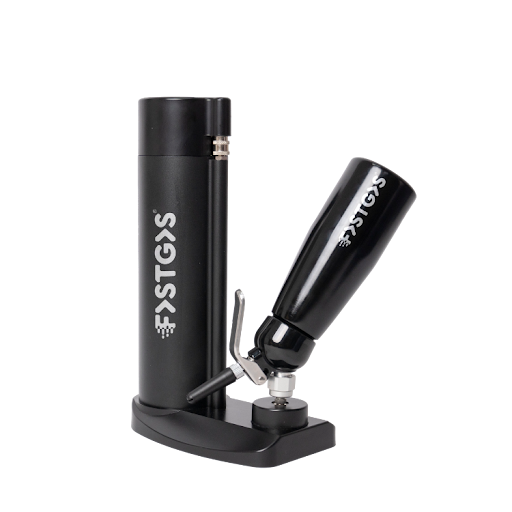
The FastGas Cream Canister is specifically suited to these commercial environments, where consistency, output volume, and reliability are non-negotiable operational priorities.
Molecular Gastronomy and Modern Cuisine
Beyond cream, N2O has become an important tool in modern and fine dining kitchens globally.
Chefs use it to create rapid infusions, foams, emulsions, and flavour-charged preparations that would be impractical to produce at speed by other means.
Its precision and speed make it a preferred input in high-output professional kitchen environments where both creativity and throughput are required simultaneously.
South Africa’s fine dining and contemporary restaurant scene has increasingly adopted these techniques, with kitchens in Johannesburg and Cape Town incorporating N2O as part of their standard culinary toolkit.
Beverage Carbonation and Cocktail Applications
In bars and beverage production, N2O is used to create nitro coffee, nitro cocktails, and cold brew applications.
Unlike CO2 carbonation, which produces sharp, acidic bubbles, N2O creates a smoother, creamier mouthfeel. That distinction matters for premium beverage products, where texture and sensory consistency are key differentiators.
N2O’s prevalence in specialty coffee and craft cocktail programmes has grown considerably, and that shift is reaching the African continent.
In South Africa’s urban hospitality market, particularly in Johannesburg and Cape Town, nitro coffee and nitro cocktails are now visible on menus at competitive establishments, signalling the trend’s maturity in these markets.
N2O in South African Restaurants and Hospitality
South Africa’s HORECA sector has developed meaningful adoption of food-grade N2O across a range of establishment types, from large catering operations and hotel kitchens to independent restaurants and fast-casual venues.
The compound is used for both back-of-house production and front-of-house service across culinary and beverage applications.
Supply access has improved as the market has grown, with specialist suppliers making food-grade N2O more accessible to professional buyers.
South African food safety regulation increasingly reflects international standards, and correctly certified N2O inputs are part of responsible commercial kitchen practice. The FastGas Creamer in Africa is an example of an N2O product that meets these commercial demands with a consistent, food-grade certified product.
N2O in Nigeria’s Growing Food Service Industry
Nigeria’s food service sector is expanding rapidly, driven by hospitality infrastructure growth in Lagos and Abuja and rising consumer expectations for premium dining experiences.
As hotel groups, restaurant chains, and independent venues invest in more sophisticated kitchen and bar operations, demand for professional-grade kitchen inputs, including food-grade N2O, is increasing steadily.
Supply access, importation logistics, and evolving regulatory frameworks for food-certified gas all remain important considerations for operators entering this market.
Nigeria represents an emerging but fast-developing market for professional N2O supply, and operators who establish reliable sourcing now are better positioned as the sector grows.
Other Commercial and Industrial Uses of Nitrous Oxide in Africa
While the food industry is among the most popular industries to use nitrous oxide, N2O has several other well-established commercial applications that are worth understanding, particularly for buyers and operators who may encounter the compound in different supply chain or procurement contexts.

Aerosol Propellant Applications
N2O is used as a propellant in a range of non-food consumer and industrial aerosol products.
Its suitability comes from a combination of key properties: it is non-flammable, chemically stable under normal storage conditions, and sufficiently soluble to dissolve into product formulations under pressure and release predictably on discharge.
Relevant product categories include certain cosmetic preparations, surface treatment products, and technical sprays where flammable propellants would create an unacceptable safety or regulatory risk.
Automotive and Engine Performance
In internal combustion engines, N2O is used to temporarily increase power output by supplying additional oxygen during the combustion cycle.
At the high temperatures inside a combustion chamber, N2O decomposes and releases oxygen, allowing more fuel to burn per cycle and generating a short-duration boost in engine power.
Automotive-grade N2O is not interchangeable with food-grade N2O. The purity requirements, handling protocols, and delivery systems differ entirely between these grades and should never be treated as substitutes.
Medical and Dental Use
In clinical settings, N2O is administered as a sedation and analgesic agent in both medical and dental procedures.
Its primary mechanism is anxiolytic and analgesic: it reduces the perception of pain and anxiety without inducing full unconsciousness, making it suitable for minor procedures where a patient needs to remain responsive.
N2O is delivered in controlled concentrations, typically mixed with oxygen, through calibrated equipment under the supervision of a trained clinician.
Medical-grade N2O is subject to separate certification and regulatory requirements from food-grade, including stricter purity standards and pharmaceutical-grade quality controls. It is not appropriate to use food-grade or industrial-grade N2O in medical applications.
Frequently Asked Questions About N2O
The following section addresses the most common questions about N2O.
What Is Food-Grade Nitrous Oxide?
Food-grade nitrous oxide is N2O that has been produced and purified to meet the safety and purity standards required for direct or indirect contact with food products.
This typically means a minimum purity level of 99.5% and freedom from contaminants that would render the gas unsafe for food preparation use.
It is the only grade of N2O appropriate for use in cream dispensers, culinary infusion devices, or beverage applications in a professional HORECA context.
Is N2O Safe to Use in Food Preparation?
Yes. When food-grade certified N2O is used correctly in appropriate equipment, it is safe for food preparation.
Its safety classification for food use is grounded in regulatory frameworks that define purity thresholds, permissible applications, and equipment standards.
That safety depends on using the correct grade and following the equipment guidelines provided by the manufacturer. We recommend always verifying the grade certification of any N2O product before use in a commercial food or beverage setting.
What Is the Difference Between N2O Grades?
The three main grades, food-grade, medical-grade, and industrial-grade, are distinguished by purity level and intended application.
Food-grade meets the standards required for food and beverage production. Medical-grade meets stricter pharmaceutical requirements for clinical administration. Industrial-grade is the least refined and is intended for manufacturing or technical applications only.
These grades are not interchangeable. For any HORECA or culinary application, food-grade nitrous oxide is the only appropriate and compliant choice.


